
The five warmest years in Indian weather history have occurred in the past 14 years -- the others being 2009, 2017 and 2010, in order of intensity.

Indian economy is likely to rebound with an 8.9 per cent growth in the fiscal year beginning April 2021 after economic activity showed significant improvement in the last quarter, IHS Markit said on Friday. The National Statistical Organisation (NSO) on Thursday predicted that the economy will contract 7.7 per cent in the current financial year ending in March, the worst performance in four decades.

India has allocated Rs 1.72 trillion, or 27.67 per cent of the total defence budget to cater to modernisation of the country's arsenal. Modern militaries spend up to 50 to 60 per cent of their total defence budget so that they go into combat with superior weaponry and equipment.

NSO has pegged economic growth at 5 per cent in 2019-20 in its second advance estimates.

'The robust tax collections give the finance minister a fair amount of headroom for an expansionary fiscal policy.'

The Survey presented by the Union Finance Minister, Shri Pranab Mukherjee in the Parliament on Friday states that the Indian economy remains the second fastest growing in the services growth with 8.9 per cent rate, behind China (10.5 per cent).
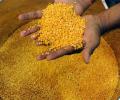
At an average national price of Rs 90 a kg in the retail market, it shows a jump by 20% in the last two months.

The World Bank has retained India's economic growth forecast for the current fiscal at 8.3 per cent as the recovery is yet to become broad-based. As per the first advanced estimates of the national income released by the National Statistical Office (NSO) last week, the economy is projected to grow at 9.2 per cent in 2021-22, surpassing pre-COVID level in actual terms, mainly on account of improved performance, especially in farm, mining and manufacturing sectors. "India's economy is expected to expand by 8.3 per cent in fiscal year 2021/22 (ending March 2022), unchanged from last June's forecast as the recovery is yet to become broad-based.

71 districts reported Covid case positivity rate of more than 10 per cent in the week from June 23 to 29, the government said, adding that the second wave of COVID-19 is not over.

A high-level committee on Thursday recommended simultaneous elections for Lok Sabha and state assemblies as the first step followed by synchronised local body polls within 100 days.

Benchmark Sensex pared early losses to close 242 points higher while Nifty settled above the 18,000-mark on Wednesday following gains in IT, oil and select banking stocks amid mixed global trends. Extending gains for a second day, the 30-share BSE Sensex advanced 242.83 points or 0.40 per cent to close at 61,275.09 with 20 of its constituents ending in the green. The index opened lower at 60,990.05 but later regained foot to touch a high of 61,352.55 in day trade.

Finance Minister Nirmala Sitharaman will present her sixth straight Budget ahead of the Parliamentary elections, matching the record of former Prime Minister Morarji Desai. Sitharaman in her pre-election Budget, which technically is a vote on account and popularly termed an interim Budget, will seek Parliament's nod for a grant in advance to meet the central government's essential expenditure for the first four months of the new fiscal year that starts in April. A new government elected after the April/May general elections will present the full Budget, likely in July.

India's biggest non-bank finance company, Bajaj Finance (BAF), is set to raise capital after a gap of four years. On October 5, the board of directors will meet to approve the fund raise by way of preferential issue and/or qualified institutional placement (QIP) subject to regulatory and shareholder approvals. The move, analysts said, comes ahead of expectations, and could be in the wake of simmering competition in the consumer lending space, especially with the launch of Jio Financial Services (Jio Fin). "While we still do not have finer details on the game-plan of Jio Financial, it has plans to initially foray into consumer and merchant lending.

Moody's Investors Service on Wednesday raised India's economic growth estimate for 2023 to 5.5 per cent from 4.8 per cent pegged earlier, on the back of a sharp increase in capital expenditure in the Budget and a resilient economic momentum. It however revised downwards India's growth estimate for 2022 to 6.8 per cent from 7 per cent pegged in November last year. In its February update to Global Macro Outlook 2023-24, Moody's raised the baseline 2023 real growth projections "meaningfully" for several G20 economies, including the US, Canada, the Euro area, India, Russia, Mexico, and Turkiye, accounting for a stronger end to 2022.

'We should look at is full year's growth rather than quarter numbers.'

'The government is of the view that distilleries around Hapur and Bijnor would pollute groundwater in the vicinity and its spill over into the sacred Ganga. Hence, we are looking to close these distilleries to prevent them from discharging water into the open area,' said a senior UP government official.

The finance ministry said on Tuesday that high energy and commodity prices due to the Russian invasion of Ukraine may provide an upside risk to inflation and continued vigil is required. "Going forward, elevated energy and commodity prices may act as an upside risk to the inflation outlook in the near-medium term. "Given the inherently unsustainable nature of high prices, international commodity prices are expected to level off early with an increase in supplies outside the crisis zone," the department of economic affairs said in its latest monthly economic report for February.

Income velocity based on currency with the public went down from 0.93 in October to 0.84 in March says a report from SBI's economic research department

The Inter-Services Intelligence (ISI), which trained a batch of Assam's United Liberation Front of Asom (ULFA) militants in 1991-92, considered the rebel group's chief Paresh Baruah a prize catch and did not want to offend him even after he was unwilling to take the agency's commands on conducting operations in the northeastern state, claims a new book.
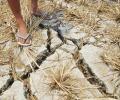
Though their intensity has been less so far and the exact impact on the crop is not yet known.

The Centre for Monitoring Indian Economy on Tuesday said industrial production growth is likely to decline in the second half of the current fiscal, while the first advanced estimate of kharif crop showed a 10 per cent drop in food production.\n\n\n\n

The sharpest contraction of the American economy in a decade is expected to get worse in the second quarter. White House senior economic adviser Kevin Hassett said that they expected second-quarter negative GDP growth between minus 15 and minus 20 per cent.

No Bollywood release nor any holdover release from last week were pitted against James Cameron's sci-fi action drama.
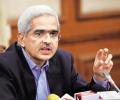
Softening inflation, Das said would make available more policy space to the central bank to address risks to the growth going forward.

One just hopes that the collections stay stable on Monday and Tuesday especially and the drop is at maximum in 30% to 40% range.

Since January 2021, the inflation rate in health has stood in the range of 6.08-8.44 per cent.
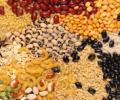
India's foodgrain production is estimated to decline by 7.51 per cent to 216.85 million tonnes in the 2009-10 season mainly due to a fall in summer output owing to the worst drought in 30 years.
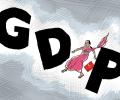
India's Gross Domestic Product (GDP) is expected to expand by 9.2 per cent in the current financial year, according to the Economic Survey 2021-22 tabled in the parliament on Monday. "Advance estimates suggest that the Indian economy is expected to witness real GDP expansion of 9.2 per cent in 2021-22 after contracting in 2020-21. "This implies that overall economic activity has recovered past the pre-pandemic levels," Economic Survey noted. Almost all indicators show that the economic impact of the "second wave" in Q1 was much smaller than that experienced during the full lockdown phase in 2020-21 even though the health impact was more severe, it said.

Monsoon rains are expected on time this year, hitting Kerala on June 1.

The Reserve Bank on Friday retained the GDP forecast for the current financial year at 9.5 per cent and flagged global semiconductor shortages, elevated commodity prices and potential global financial market volatility as downside risks to economic growth. In his address after the three-day meeting of the rate-setting panel, RBI Governor Shaktikanta Das said recovery in aggregate demand gathered pace in August-September, and it is reflected in high-frequency indicators, like railway freight traffic; port cargo; cement production; electricity demand; e-way bills; GST and toll collections. "The ebbing of infections, together with improving consumer confidence, has been supporting private consumption," he said, and added the pent-up demand and the festival season should give further fillip to urban demand in the second half of the financial year.

Most analysts expect the note ban to sharply hit GVA growth in Q3 and Q4, and the central bank's stance is being called into question.

Economists have said if a stimulus is needed it should be different from what was provided in 2008-09, when the economy faced the ripple effects of a global meltdown following the Lehman Brothers collapse.

Analysts on average had expected a net profit of Rs 26.93 billion for ICICI Bank, which is also listed in New York.

India's PV Sindhu outclassed World No. 2 Akane Yamaguchi in straight games to storm into the final of the World Championships in Nanjing
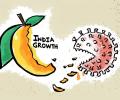
The International Monetary Fund (IMF) on Tuesday cut its economic growth forecast for India to 9.5 per cent for the fiscal year to March 31, 2022 as the onset of a severe second COVID-19 wave cut into recovery momentum. This forecast for 2021-22 is lower than the 12.5 per cent growth in GDP that IMF had projected in April before the second wave took a grip. For 2022-23, IMF expects economic growth of 8.5 per cent, larger than the 6.9 per cent it had projected in April.

However, the World Bank has projected India's GDP growth rate at 7.5 per cent for the next three financial years, including the current one.

Analysts have turned cautious on Cipla, as the recently issued form 483 by the US FDA with eight observations to its Pithampur (Indore) plant is expected to delay the launch of the company's key generic - Advair - in the US. The Indore plant contributes around 5 per cent of Cipla's revenues, as per analysts' estimates. While the respiratory product, which is used to treat asthma, had cleared the pre-approval inspection of the regulator at the Indore unit; the final approval could be unlikely until the company clears the recent US FDA observations, analysts say.

A few days back, Atul Ganatra, president of the Cotton Association of India, presented a grim scenario of the crop's prospects in the 2024-25 season that starts in October. Addressing the association's annual general meeting, Ganatra said the area under the crop could go down by at least 10 per cent in the coming season due to falling yields and realisation, leading to farmers losing interest. The fear of a decline in acreage comes against the backdrop of India's cotton production probably falling to its lowest in a decade, according to estimates.

Petrol doped with 20 per cent ethanol was rolled out on Monday at select petrol pumps in 11 states and union territories as part of a programme to increase use of biofuels to cut emissions as well as dependence on foreign exchange-draining imports. At present, 10 per cent ethanol is blended in petrol (10 per cent ethanol, 90 per cent petrol) and the government is looking to double this quantity by 2025. Prime Minister Narendra Modi launched the higher 20 per cent ethanol blended petrol two months ahead of the planned rollout in April, at the India Energy Week (IEW) 2023 in Bengaluru.

Sowing up 400%; prices may be low in 2014 as Maharashtra, MP and Bengal also likely to increase acreage 15-20%.
 © 2026 Rediff.com - Advertise with us - Disclaimer - Privacy Policy - Sitemap - Feedback - About us - Terms of use - Grievances